Course 101 · Kitchen down
Kitchen Emergency 101: Planning a Mobile Kitchen Trailer Rental
A short course for facilities and food service directors: what to do in the first hours after a kitchen closes, and how to plan a temporary kitchen, dish line, and cold storage for an emergency or a renovation.
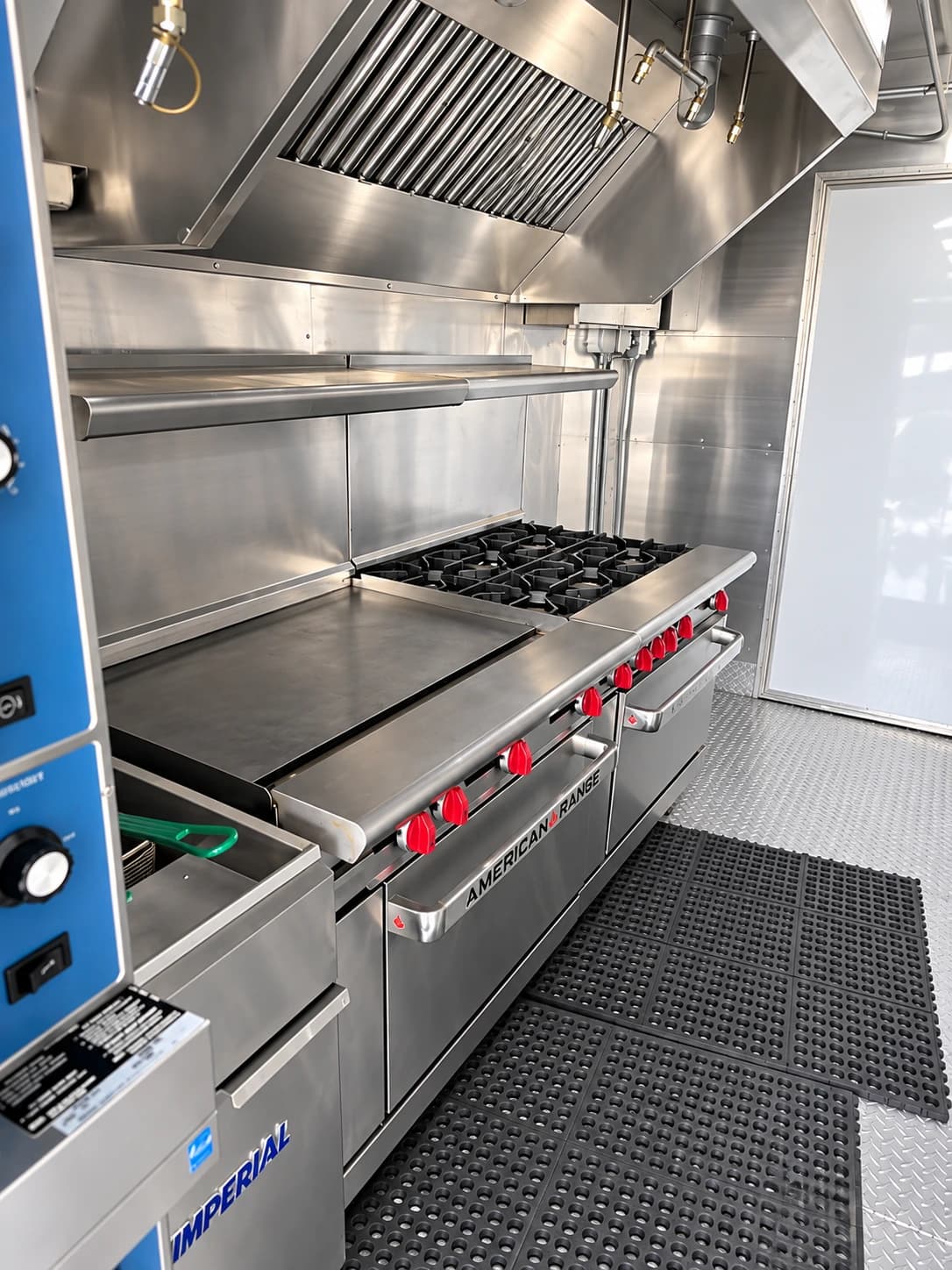
101.ASteps
Six steps when a kitchen goes offline
01
Protect people and product
Make the space safe first. If refrigeration failed, log temperatures and move product to working cold storage; the FDA Food Code sets the time and temperature limits most health departments enforce. An emergency refrigeration trailer can arrive while the walk-in is diagnosed.
02
Count meals, not square feet
Write down meals per day, meal periods, menu style (scratch or heat-and-serve), and peak headcount. Those four numbers decide between a 24 ft standard, 40 ft combo, or 40 ft bulk mobile kitchen trailer.
03
Check utilities
Find the electrical service you can tap (voltage, phase, amps), potable water, and the wastewater route: sewer connection or holding tank and pump-out. Note that the 30 ft conveyor dish trailer needs three-phase power.
04
Pick the spot
A level, firm surface near a door your staff can use, with a clear turning path for a long trailer. Measure gates and overhead clearance. Decide on stairs or a ramp.
05
Call the authorities early
Health, building, and fire officials may need to approve a temporary kitchen. Requirements vary by city and county; ask before delivery day, and we'll send equipment details.
06
Plan the exit
Agree an end date, an extension rule, and who signs off on pickup. A planned exit keeps a renovation rental from running months past the reopening.
101.BReading
Official references
- FDA Food Code: the model code most state and local health departments adopt.
- Ready.gov business preparedness: continuity planning for facilities.
- FEMA disaster declarations: the federal record of declared disasters by state and county.
24/7 emergency line
Kitchen down? Emergency kitchen rentals nationwide
A fire, flood, or failed hood can close a kitchen overnight. Call any hour with your address, meals per day, when the kitchen went down, and the power and water on site.
101.CFAQ
Frequently asked questions
Q01Can I keep serving meals during a kitchen renovation?
Yes. Renovation is the most common reason to rent. The trailer parks next to your building, connects to power and water, and carries food service until the permanent kitchen reopens. Weekly and monthly terms let the rental follow your construction schedule.
Q02What utilities does a mobile kitchen trailer need?
Electrical service, potable water, and a wastewater plan. Our standard kitchens list 220V single-phase service at 200 to 220 amps; each unit page shows its own requirement. Wastewater goes to a sewer connection or to holding and pump-out, depending on the site.
Q03Which dishwashing trailer do I need?
Match it to volume. A 22 to 26 ft low-temperature push-through trailer handles moderate service; 30 and 38 ft conveyor trailers handle hospital, campus, and correctional volume. The 30 ft conveyor trailer needs three-phase power.
Q04What should I do first when a walk-in cooler or freezer fails?
Call (888) 385-5513, day or night. We'll check the nearest available refrigerated trailer or container, the delivery timing for your address, and the power it needs. We confirm availability before giving any delivery time.
Q05How much does it cost to rent a mobile kitchen trailer?
Mobile kitchen trailers start from $4,995 per month, dishwashing trailers from $4,995 per month, and refrigeration from $1,895 per month. Delivery, setup, pickup, utilities, and permits are quoted separately for your address.
Q06Do you offer long-term kitchen trailer leases?
Yes. Rentals run by the week or by the month (1 week or monthly), and a long-term lease can last for the full length of a multi-month rebuild.
Q07How long does setup take after delivery?
About 5 hours for kitchen and dishwashing trailers and about 1 hour for other units. Stairs take 5 to 15 minutes to place; a ramp, when needed, takes 4 to 6 hours.
Q08Do I need a permit for a temporary kitchen trailer?
Often, but it depends on the jurisdiction. Health, building, fire, and temporary-use approvals vary by city and county and by how the kitchen will be used. Contact your local authorities early; we'll provide the equipment details they ask for.
101.DQuote
Request a kitchen rental quote
Checklist for an accurate quote
- Site address, city, state, and ZIP code
- Equipment: kitchen, dishwashing, refrigeration, or a mix
- Meals per day and number of meal periods
- Start date and how long the kitchen will be offline
- Electrical service available (voltage, phase, amps)
- Potable water and wastewater or sewer access
- Parking surface and delivery access
- Stairs or a ramp
- Emergency or planned project
Prefer to talk? (888) 385-5513, 24/7.